
Sinusitis Treatment in St. Peters, MO
What Is Sinusitis?
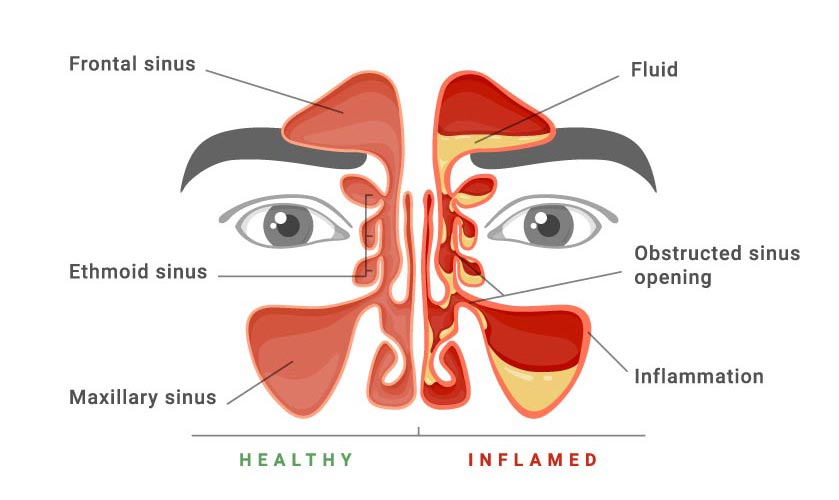
The term sinusitis refers to inflammation of the sinus lining. This inflammation can be associated with infection (viral, bacterial or fungal), genetic factors or airborne allergens.
In many cases this swelling causes a structural blockage at the sinus opening, preventing normal mucus drainage. When sinuses cannot freely drain, it can lead to many uncomfortable symptoms we associate with sinus problems.
Symptoms of Sinusitis
Facial pain, pressure and fullness
Nasal congestion or blockage
Thick, discolored nasal or post-nasal discharge
Decreased or lost sense of smell and/or taste
Swelling over the face or around the eyes
Sore throat from excessive drainage
Fatigue
Types of Sinusitis
How Can I Avoid Sinus Infections?
Sinus infections (sinusitis) occur when fluid becomes trapped in the sinus cavities, creating an environment where bacteria or viruses can thrive. This trapped fluid can lead to facial pressure, congestion, headaches, and difficulty breathing. While sinus infections can be uncomfortable, there are proactive steps you can take to reduce how often they occur and protect your sinus health.
You may be able to reduce the frequency of sinus infections by following these preventive measures:
- Practice good hand hygiene
- Stay up to date on recommended vaccinations
- Maintain a clean home environment
- Avoid smoking and secondhand smoke
- Limit exposure to known allergens
- Replace filters in humidifiers and air conditioning units regularly
- Avoid close contact with individuals who have active colds
- Use a humidifier to keep indoor air comfortably moist
What Happens if a Sinus Infection Is Left Untreated?
Most viral sinus infections resolve on their own within 7–10 days with rest and supportive care. However, if symptoms persist beyond that timeframe or worsen, it may indicate a bacterial sinus infection, which often requires medical evaluation and treatment.
In rare cases, untreated sinus infections can lead to complications, such as the spread of infection to nearby structures or the development of chronic sinusitis. Long-term sinus problems are more commonly associated with underlying conditions—such as allergies, nasal polyps, or structural blockages—rather than a single untreated infection.
Causes of Sinusitis
Like the delicate lining of your nose, your sinuses are protected by a soft mucous membrane that naturally produces fluid to keep your system clear. This fluid flows gently through small openings into the nasal passages, acting as a vital shield that captures dust, pollen, and germs from the air you breathe every day. If these pathways happen to become congested, it can lead to discomfort or infection, but understanding this process is the first step toward finding relief. We invite you to see this mucus not as a nuisance, but as your body's dedicated way of filtering and cleaning itself to keep you healthy.
Difference Between Acute, Subacute & Chronic Sinusitis
To better understand your condition, it is helpful to categorize sinusitis by its duration and frequency. Recognizing these differences allows our team to tailor a treatment plan specifically suited to your history and symptoms. The types of sinusitis include:
- Acute Sinusitis – Symptoms last less than 4 weeks, often following a common cold
- Subacute Sinusitis – Symptoms persist for 4 to 12 weeks
Chronic Sinusitis – Symptoms last 12 weeks or longer, often requiring advanced treatment
How Can Dr. Matt Conoyer & Dr. Karen Boone Help?
We are experts at getting to the root of your problem efficiently and accurately. After your physician obtains a history and performs a physical exam, we may recommend additional treatment and/or specialized diagnostic testing such as in-office CT scanning, nasal endoscopy or allergy testing. All steps taken are designed to get you closer to an accurate diagnosis–and a treatment plan or intervention that can be expected to bring lasting relief.
Learn more about balloon sinus dilation and the many other personalized and permanent office-based solutions Dr. Matt Conoyer & Dr. Karen Boone expertly deliver each and every day.